
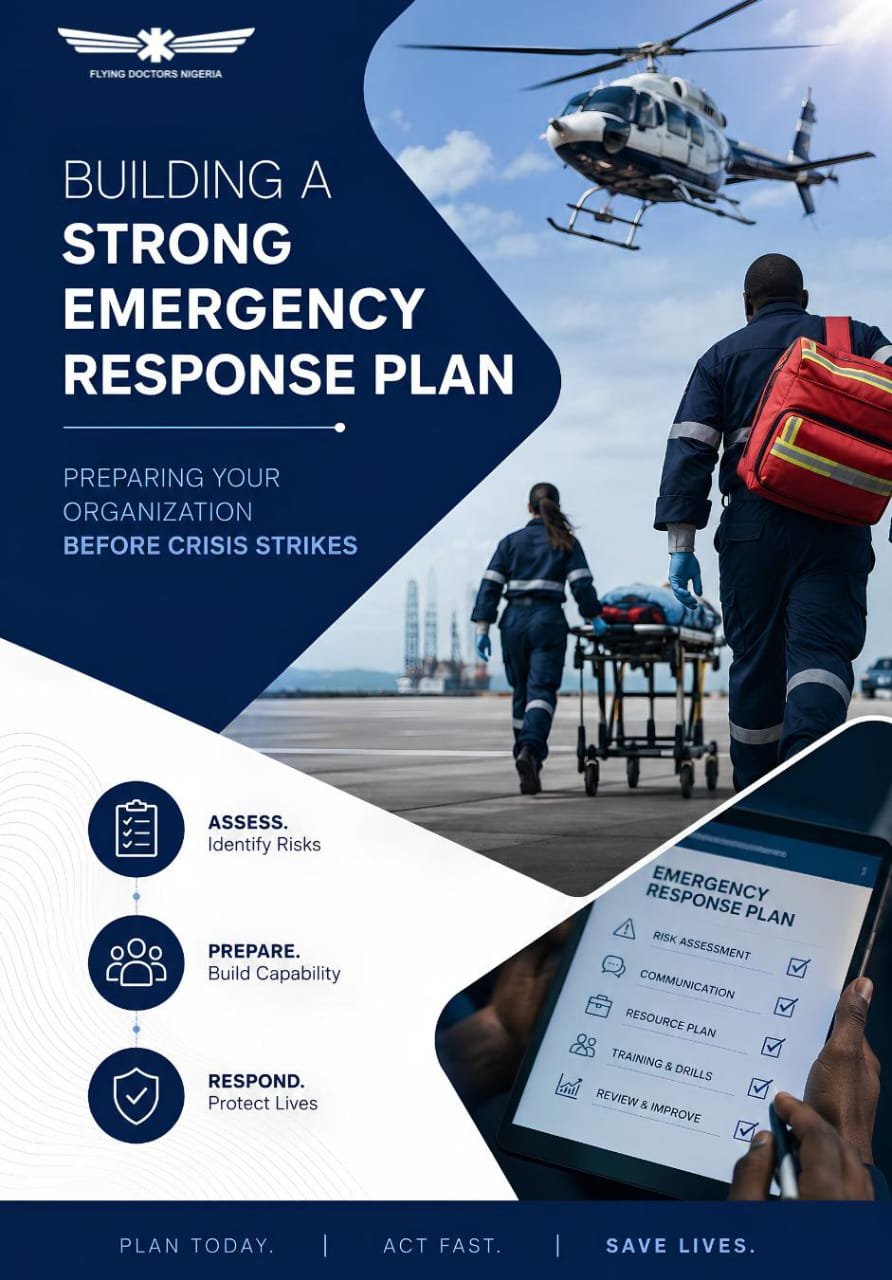
Emergencies are unpredictable, but an organization’s response does not have to be.
A medical emergency, workplace accident, fire incident, security threat, or operational disruption can happen at any time. The difference between a chaotic response and an effective one often comes down to preparation.
An Emergency Response Plan (ERP) provides organizations with a clear framework for managing unexpected situations, protecting employees, reducing risks, and ensuring business continuity when it matters most.
For companies operating in high-risk environments, emergency preparedness is not just a safety requirement—it is a critical part of responsible business operations.
Why Emergency Preparedness Matters
When an emergency occurs, every second counts. Without a structured response plan, organizations may experience delays in decision-making, poor communication, confusion among teams, and increased risks to employees.
A well-developed Emergency Response Plan helps organizations to:
- Respond quickly and effectively during emergencies.
- Protect employees, contractors, and visitors.
- Minimize the impact of incidents on operations.
- Improve coordination between internal teams and external responders.
- Ensure access to appropriate medical and emergency support.
- Strengthen workplace safety culture.
Being prepared means having the right people, processes, and resources in place before an emergency happens.
Key Elements of an Effective Emergency Response Plan
1. Understand Your Risks
Every organization faces different risks depending on its industry, location, and operational activities.
The first step in developing an effective response plan is identifying potential hazards, including:
- Workplace injuries and medical emergencies.
- Industrial accidents.
- Fire and explosion risks.
- Environmental hazards.
- Security incidents.
- Transportation-related emergencies.
- Challenges associated with remote locations.
A proper risk assessment helps organizations understand their vulnerabilities and develop appropriate response strategies.
2. Establish Clear Emergency Procedures
A response plan should provide clear instructions on what to do during different emergency situations.
This includes defining procedures for:
- Reporting an incident.
- Providing immediate first aid.
- Contacting emergency responders.
- Evacuating affected personnel.
- Coordinating medical evacuation when required.
- Communicating with relevant stakeholders.
Clear procedures reduce uncertainty and allow teams to act quickly under pressure.
3. Assign Roles and Responsibilities
During an emergency, everyone should understand their role.
Organizations should identify key personnel responsible for:
- Emergency coordination.
- First aid response.
- Incident management.
- Communication and reporting.
- Evacuation support.
- Liaison with external emergency services.
Clearly defined responsibilities improve coordination and prevent delays during critical moments.
4. Develop Reliable Communication Systems
Effective communication is one of the most important parts of emergency response.
Organizations should establish:
- Emergency contact lists.
- Escalation procedures.
- Communication channels for different scenarios.
- Contact details for medical providers, hospitals, and emergency partners.
A reliable communication process ensures the right information reaches the right people at the right time.
5. Partner with the Right Emergency Medical Provider
For many organizations, especially those operating in remote or high-risk locations, access to professional emergency medical support is essential.
A trusted emergency medical partner can provide:
- Ground ambulance services.
- Air ambulance evacuation.
- Medical case coordination.
- Occupational health support.
- Emergency medical advice.
- Workplace medical assessments.
Having these arrangements in place before an emergency occurs can significantly reduce response time and improve patient outcomes.
6. Train, Test, and Improve Your Plan
An Emergency Response Plan is only effective when people know how to use it.
Regular training and simulations help employees understand their responsibilities and build confidence during emergencies.
Organizations should conduct:
- First aid and CPR training.
- Emergency drills.
- Medical evacuation exercises.
- Incident response simulations.
- Post-drill reviews and improvements.
Continuous testing ensures the plan remains practical and effective.
Emergency Preparedness as a Business Strategy
Emergency response planning is more than a safety obligation, it is an investment in organizational resilience.
Companies with strong emergency preparedness systems are better positioned to:
- Protect their workforce.
- Maintain operational continuity.
- Reduce downtime.
- Improve employee confidence.
- Demonstrate commitment to health and safety.
In industries where risks are unavoidable, preparedness creates a stronger foundation for sustainable operations.
How Flying Doctors Nigeria Supports Emergency Preparedness
At Flying Doctors Nigeria, we support organizations in strengthening their emergency response capabilities through integrated medical solutions, including:
- Air ambulance services.
- Ground ambulance support.
- Medical evacuation planning.
- Occupational health services.
- Emergency response training.
- Health risk assessments.
- Medical case management.
Our team works with organizations to develop practical emergency solutions designed around their specific operational risks and environments.
Conclusion
Emergencies cannot always be prevented, but organizations can control how they respond.
A well-designed Emergency Response Plan ensures that when a crisis occurs, teams are prepared, decisions are faster, and employees receive the care they need.
Preparedness saves time. Preparedness protects people. Preparedness saves lives.
At Flying Doctors Nigeria, we help organizations prepare today for the emergencies of tomorrow.